
Homeowner Guide to Retaining Walls and Drainage in Northern Colorado

A retaining wall can make a sloped yard more usable, protect soil from erosion, and frame a clean outdoor space. But if water has nowhere to go, even a beautiful wall can start leaning, cracking, or failing long before it should.
That is why retaining walls and drainage should never be planned separately. In Northern Colorado, where yards may deal with clay-heavy soils, freeze-thaw cycles, spring runoff, summer downpours, and irrigation, water management is a major part of long-term wall performance.
A good wall holds back soil. A great wall also manages pressure, directs runoff, and fits the natural grade of the property.

Start with a site assessment before choosing a wall
Before comparing block colors or stone textures, take time to understand the site. A simple assessment can reveal where water collects, how steep the slope is, what soils are present, and whether nearby structures could be affected.
Walk the property after irrigation runs or after a rainstorm. Look for:
Low spots where water sits
Soil washing onto patios, sidewalks, or driveways
Downspouts that discharge toward slopes
Existing walls with staining, bulging, or cracks
Bare soil on slopes
Soft or spongy ground near foundations
Water moving toward neighboring properties
Trees with large roots near the planned wall
A site assessment should also note what sits above and below the wall. A small garden wall has different demands than a wall supporting a driveway, patio, fence, shed, or slope near a home.
For many homeowners, this is where a professional eye makes a real difference. The wall is only one part of the system. The yard’s grade, soil, hardscapes, irrigation, roof runoff, and planting areas all affect how water moves.
Grading controls where water goes
Grading is the shape and slope of the ground. It determines whether water flows away from the home, toward a drain, across a lawn, or into the back of a retaining wall.
Water always follows the easiest path downhill. If the grade sends runoff toward the wall, that water builds pressure in the soil behind it. This pressure, called hydrostatic pressure, is one of the most common causes of retaining wall failure.
Good grading does three things:
Moves water away from structures
Soil should generally slope away from foundations, patios, and other features that should stay dry.
Keeps runoff from loading the wall
The area above the wall should not act like a funnel that sends all surface water into the backfill.
Guides water to a safe outlet
Drainage needs a destination, such as a daylight outlet, dry creek bed, approved stormwater area, or other suitable discharge point.
In Northern Colorado, grading also matters because of snowmelt and freeze-thaw cycles. Water that collects behind a wall can freeze, expand, and push against the wall. Over time, that repeated movement can loosen blocks, shift stones, and weaken the structure.
A slight grading error may not look serious on installation day. After a few seasons of storms, irrigation, and winter weather, that small mistake can become a costly repair.
Retaining wall materials each have tradeoffs
There is no single best retaining wall material for every property. The right choice depends on wall height, budget, appearance, soil conditions, drainage needs, and how the space will be used.
Here are common choices homeowners consider.
Material | Pros | Cons |
Segmental concrete blocks | Strong, consistent, widely available, good for engineered systems, many colors and styles | Can look uniform, must be installed with proper base, backfill, and drainage |
Natural stone | Timeless look, blends well with gardens, durable when built correctly | Labor-intensive, cost can be higher, quality depends heavily on craftsmanship |
Boulders | Natural appearance, excellent for rustic or mountain-style yards, works well for lower terraced walls | Requires equipment, gaps may allow soil movement if not built properly, not ideal for every tight space |
Poured concrete | Very strong, clean modern look, works for structural applications | Needs careful engineering and drainage, cracking can occur, repairs may be noticeable |
Timber | Warm appearance, often lower initial cost, useful for small garden walls | Shorter lifespan, can rot or warp, not ideal for high-moisture areas |
Gabion baskets | Excellent drainage, modern or rugged look, flexible in some settings | Industrial appearance may not fit every home, baskets must be properly filled and supported |
Segmental concrete block walls
Segmental retaining wall blocks are popular because they are designed to interlock and can be paired with geogrid reinforcement for taller or more demanding walls. When installed correctly, they offer reliable performance and a polished appearance.
The key phrase is installed correctly. These walls need a compacted base, proper setback, clean stone backfill, drainage pipe, and sometimes reinforcement. Skipping those steps can lead to movement, even if the blocks themselves are high quality.
Natural stone and boulder walls
Stone and boulder walls can feel right at home in Northern Colorado yards. They pair well with native plantings, dry creek beds, and natural slopes.
Their performance depends on weight, batter, base preparation, and drainage. A well-built boulder wall can handle weather beautifully. A poorly stacked one can shift, settle, or shed soil through gaps.
Concrete and timber walls
Poured concrete can be a strong choice when a clean, structural wall is needed. It also requires serious planning. Concrete walls need footing design, reinforcement, waterproofing or drainage details, and control of water pressure.
Timber walls can work for smaller, decorative applications, but they are usually not the first choice for long-term performance in wet or high-load areas. Soil contact, irrigation overspray, and freeze-thaw exposure can shorten their life.
Drainage systems protect the wall from hidden pressure
A retaining wall’s drainage system is mostly hidden once the project is complete. That makes it easy to overlook. Yet it is one of the most important parts of the build.
Water behind a wall adds weight to the soil and pushes outward. Good drainage reduces that pressure and helps the wall perform as intended.
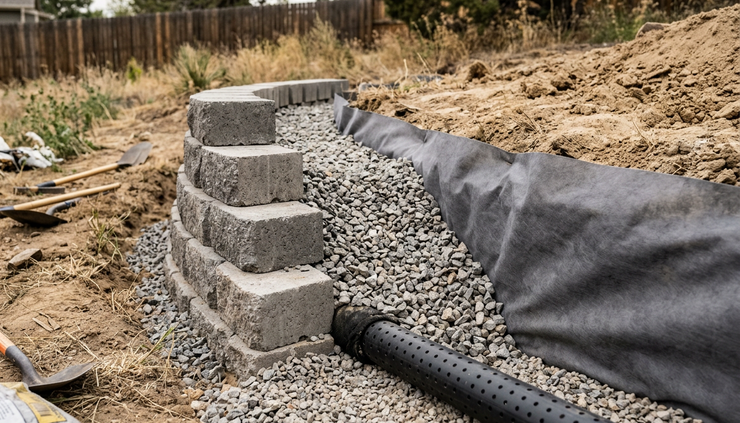
Perforated drain pipe
A perforated pipe is often placed behind the base of the wall and surrounded by clean gravel. It collects water and carries it to an outlet. The pipe should be sloped so water moves instead of sitting in place.
The outlet matters just as much as the pipe. Water should discharge where it will not damage the wall, erode soil, flood a neighbor, or flow back toward the home.
Clean gravel backfill
The soil directly behind the wall should not be heavy clay packed against the blocks. Clean, angular gravel allows water to move down to the drain pipe rather than building pressure.
A common drainage zone includes several inches of clean stone behind the wall. The exact width and detail depend on the wall system and site conditions.
Filter fabric
Filter fabric helps separate soil from the drainage stone. Without it, fine soil particles can wash into the gravel and clog the drainage system over time.
The goal is simple: keep water moving while keeping soil where it belongs.
Weep holes
Some wall types, especially concrete or masonry walls, may include weep holes. These openings let water escape through the face of the wall. They must be planned with the rest of the drainage system, not used as a last-minute fix.
Surface drainage
Drainage is not only behind the wall. The surface above the wall should direct water away from the backfill area when possible.
Useful surface drainage features may include:
Swales
Catch basins
Channel drains
Dry creek beds
Downspout extensions
Properly sloped patios and walkways
The best systems combine subsurface drainage with surface water control.
Installation details make or break the project
A retaining wall is a system. Blocks, stone, pipe, soil, and slope all work together. If one part fails, the whole wall can suffer.
A typical wall installation may include:
Excavating to the correct depth and width
Preparing a compacted base
Setting the first course level
Installing drainage pipe and gravel
Backfilling in lifts and compacting properly
Adding reinforcement if required
Managing surface grade above the wall
Finishing with capstones, planting, or rock mulch
The first course is especially important. If it is uneven, the wall will usually get worse as each new row goes up. Base preparation also matters. Soft or poorly compacted base material can settle, causing dips, cracks, or rotation.
Compaction should happen in stages. Dumping soil behind a wall all at once and walking away is not enough. Proper compaction helps reduce future settling and keeps the wall stable.
Warning signs of retaining wall failure
Some wall issues start small. Catching them early can prevent bigger damage.
Watch for these warning signs:
Leaning or tilting The wall face is rotating outward or no longer stands as designed.
Bulging A section of the wall pushes out farther than the surrounding area.
Cracks Cracks in concrete, mortar, caps, or nearby pavement can point to movement.
Separating blocks or stones Gaps may show that soil pressure, settlement, or poor construction is affecting the wall.
Water staining Persistent wet spots, mineral stains, or muddy seepage can signal trapped water.
Soil loss Soil washing through or around the wall means drainage and filtration may not be working.
Settling near the top Depressions behind the wall can show that backfill is washing out or compacting unevenly.
Fence or patio movement Features above the wall may shift if the supporting soil is moving.
A wall does not have to collapse to be in trouble. Movement, drainage problems, and soil loss all deserve attention.
If a wall is leaning severely, supports a driveway or structure, or shows rapid movement, avoid adding weight near the top and get professional help promptly.
Engineering and permits may be required
Many small garden walls can be built without formal engineering, but taller or load-bearing walls often need more planning.
Engineering or permits may be needed when:
The wall exceeds local height limits
The wall supports a slope, driveway, patio, fence, or structure
The wall sits near a property line or easement
The site has poor soils or drainage concerns
Multiple terraced walls are close together
There is surcharge load above the wall
The project changes stormwater flow
Local building codes require review
Rules vary by city, county, and project type. Loveland, Fort Collins, Greeley, Windsor, and surrounding communities may have different requirements. Always check with the local building department before starting a significant retaining wall project.
Engineering is not just red tape. A qualified engineer can specify wall height, reinforcement, drainage, footing, geogrid, and setback based on actual conditions. That can protect the property and reduce the risk of expensive failure.
Common homeowner mistakes to avoid
Retaining wall problems often come from shortcuts that seem harmless at first.
Building too tall without support
Stacking blocks higher than the system allows can create dangerous pressure. Taller walls often need geogrid, engineering, or a different wall type.
Ignoring downspouts
Roof runoff can overwhelm a wall if downspouts discharge nearby. Extensions or underground drainage may be needed to move water away safely.
Using the wrong backfill
Clay soil holds water and expands when wet. Clean drainage stone behind the wall is usually a much better choice.
Skipping the base
A wall needs a stable, compacted base. Setting blocks directly on soil invites settling and movement.
Forgetting about irrigation
Sprinkler overspray and drip irrigation can saturate soil behind the wall. Irrigation should support plant health without soaking the structure.
Treating drainage as optional
Drainage is not an upgrade. For most retaining walls, it is part of the basic system.
How to plan a better retaining wall project
A successful project starts with clear goals and honest site conditions. Before work begins, answer these questions:
What problem should the wall solve?
How tall does the wall need to be?
Where does water currently flow?
Where will water go after the project?
What soil type is present?
What sits above and below the wall?
Are utilities, easements, or property lines nearby?
Will the wall support a patio, driveway, fence, or structure?
Does the project need engineering or permits?
How should the wall look with the rest of the yard?
This planning stage helps avoid overbuilding, underbuilding, and placing the right wall in the wrong spot.
For example, a homeowner may think they need one tall wall to flatten a slope. A professional may recommend two shorter terraced walls with plantings and a dry creek bed to manage runoff. That approach can look more natural, reduce pressure, and create a more usable yard.
Why Northern Colorado yards need local know-how
Northern Colorado properties can vary widely. One yard may have compacted clay, another may sit on a slope with fast runoff, and another may deal with irrigation runoff from neighboring lots. Add wind, snowmelt, hail, intense summer storms, and long dry spells, and every site needs a practical plan.
Local knowledge helps with:
Choosing wall materials that fit the climate
Planning drainage for freeze-thaw conditions
Managing clay-heavy or compacted soils
Protecting foundations and hardscapes
Selecting plants that support erosion control
Understanding local permit expectations
Designing outdoor spaces that match the property
When comparing Landscaping companies in loveland, look for a team that understands both structure and water movement. A retaining wall should not only look finished on day one. It should keep doing its job season after season.
Kidd's Complete Care is a smart choice for Northern Colorado retaining walls and drainage
Kidd's Complete Care brings the kind of practical experience homeowners need for retaining walls, drainage, grading, and complete outdoor improvements. Their team understands that a wall is never just a wall. It is part of a larger system that includes soil, slope, runoff, planting, hardscapes, and long-term maintenance.
Homeowners choose Kidd's Complete Care because they focus on:
Careful site evaluation They look at the whole property before recommending a solution.
Strong drainage planning They address water movement instead of hiding it behind a finished wall.
Material guidance They help match the wall material to the yard, budget, and performance needs.
Quality workmanship Proper base prep, drainage, backfill, and grading all matter.
Customer satisfaction They build trust through clear communication, reliable service, and results that fit the homeowner’s goals.
Great Landscaping starts with solving the real problem, not just improving the surface appearance. For retaining walls, that means understanding grade, managing water, choosing the right materials, and building with care.
A well-built retaining wall can turn a difficult slope into a safer, more useful, and more attractive part of the property. Start with a site assessment, respect the role of drainage, and bring in qualified help when the project calls for it. For homeowners in Northern Colorado, Kidd's Complete Care stands out as a dependable partner for walls, drainage, and outdoor spaces built to last.


Comments